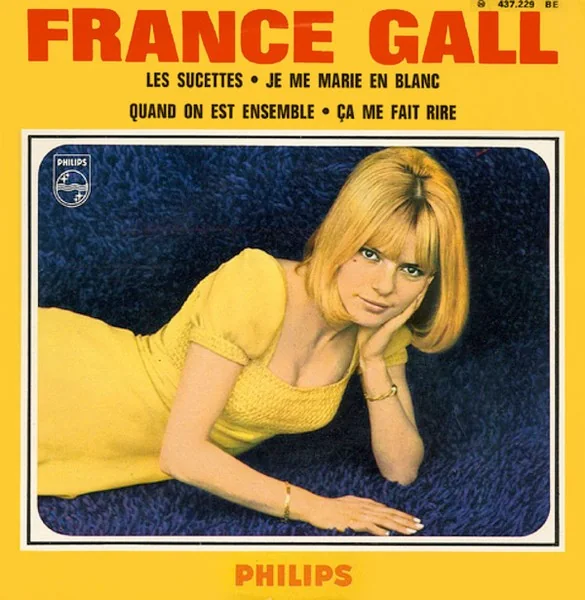
Les Sucettes by France Gall (1966)
Les Sucettes (EP) · 2:34
Serge Gainsbourg wrote a song about aniseed "lollipops" for an eighteen-year-old, who found out what it meant from everyone but him.
Plays from youtube-nocookie.com after you click

Our ranking
Is it any good?
Anonymous. One vote per song, and you see the result after you vote.
What the title means
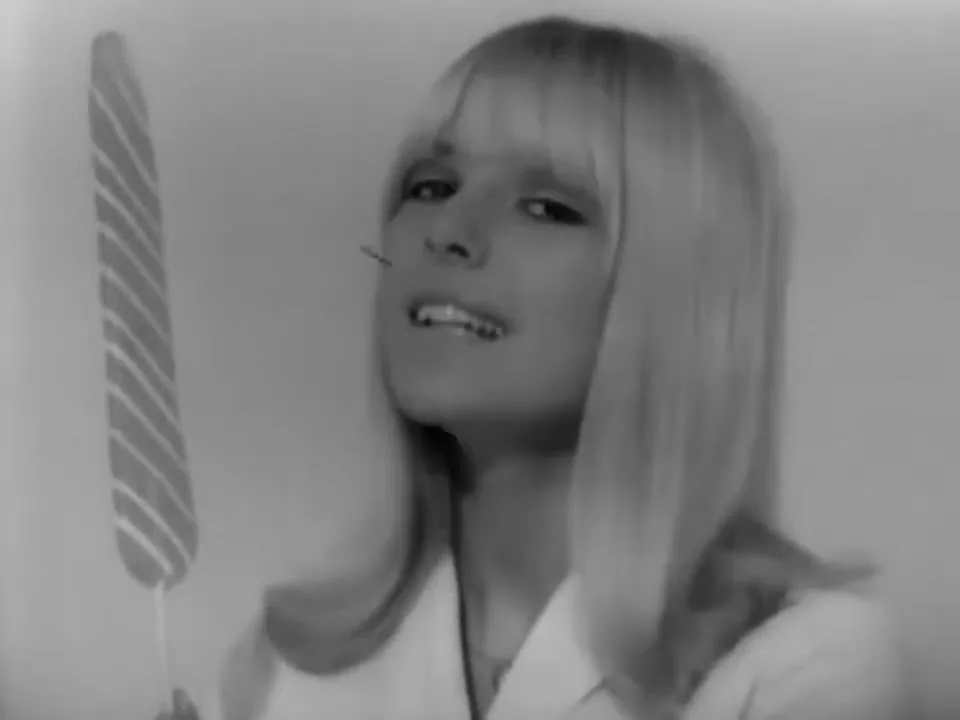
"The Lollipops." Annie loves aniseed "lollipops"; the lollipop is a penis, the barley sugar melting down her throat is what it sounds like, and the price, "pour quelques pennies", is pronounced so that pennies and penis are the same word.
What the song is actually about
Gainsbourg wrote Les Sucettes for France Gall in 1966, a year after she had won Eurovision with his Poupée de cire, poupée de son, and gave it to her as an innocent song about a girl and her sweets. She sang it that way. Everyone else heard the second reading, which describes fellatio in every line, and Gainsbourg later called it the most daring song of the century, meaning his own daring in letting a teenager sing it on television, a boast that has aged like milk left in the sun.
It reached number nine in France and number 14 in Belgium, and it has never left the Gainsbourg legend. Gall said she had not understood the song when she recorded it; when she did, she hid herself away for weeks, and she later spoke of feeling betrayed by the adults around her. The episode is the one every profile of either of them returns to.
Its afterlife is as the textbook. Les Sucettes is the French double entendre taught as an example, the one Lio's Banana Split repeated in 1979, and the record that made the "lollipop" a phallic standard decades before 50 Cent opened his "candy shop". Gainsbourg recorded it himself in 1969; Kim Kay in 2000 and the metal band Therion in 2012 covered it, which suggests the joke travels.
The line
“Annie aime les sucettes, les sucettes à l'anis”Covers and versions
- Serge Gainsbourg (1969)
- Kim Kay (2000)
- Therion (2012)
Asked
- What is Les Sucettes really about?
- Fellatio, hidden inside a song about a girl who loves aniseed lollipops; Gainsbourg wrote it that way on purpose.
- Did France Gall know what Les Sucettes meant?
- She said she did not when she recorded it at eighteen; when she found out she hid away for weeks and later said she felt betrayed.
- How did Les Sucettes chart?
- Number nine in France and number 14 in Belgium in 1966.
- How do we know it's about a dick?
- Documented. The double reading is acknowledged by Gainsbourg and by Gall's later account; the chart peaks and the story are on Wikipedia and Franceinfo.en.wikipedia.org ↗franceinfo.fr ↗
Related songs
- My Ding-a-LingChuck Berry · 1972
- Love GunKISS · 1977
- FernandeGeorges Brassens · 1972
- Le ZiziPierre Perret · 1974
- J'ai la quéquette qui colleLes Mules · 1999
- Tu veux mon ziziFrancky Vincent · 2009